
Pragmatic Play · Cluster Slot
Hell Butcher
A dark-themed cluster slot featuring a 6×6 grid and a dynamic multiplier track reaching up to x512. Four free spins modes, a bonus buy option, and one of the highest RTPs among Pragmatic Play’s slots. Suitable for cautious play at minimum bets as well as aggressive play with bonus buys.
RTP
99%
Max Win
x20 000
Multiplier
x512
Grid
6×6
Volatility
High

A solid Hell Butcher strategy isn’t about beating the random number generator — no legitimate approach to a licensed slot can do that. It’s about managing bankroll, bet size, and session pacing in a way that accounts for the game’s high volatility and its compounding multiplier system, which rewards long cascade chains more than any single large cluster. This guide walks through every practical component of a well-structured Hell Butcher strategy, from bankroll allocation to session tracking, with the reasoning behind each recommendation.
Understanding the Multiplier System Before Building a Hell Butcher Strategy
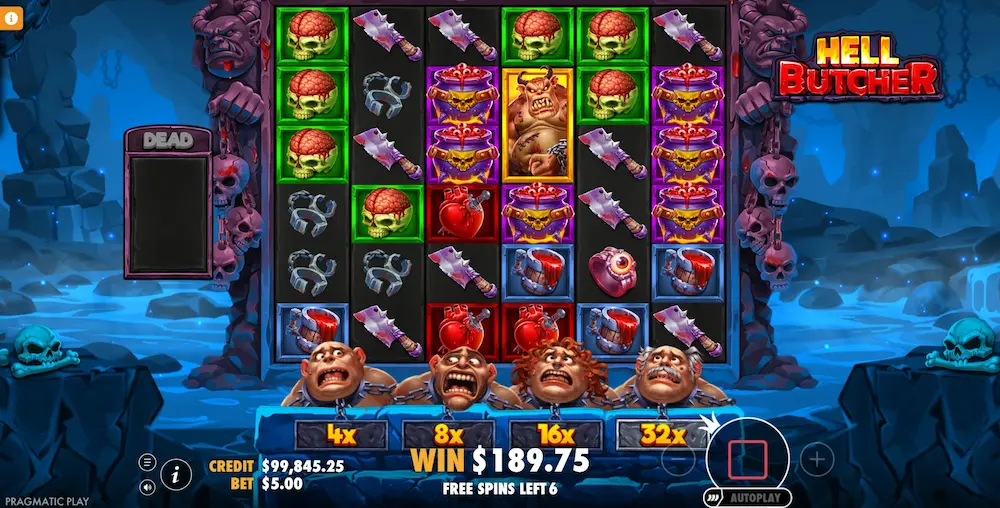
Before any bankroll or betting plan makes sense, it helps to understand what actually drives variance in this specific game. Unlike cluster pays titles where a multiplier is tied to a single special symbol, the Hell Butcher slot’s multiplier compounds with every consecutive cascade in a winning sequence, climbing as high as x512 across a fully extended chain. A Hell Butcher strategy has to account for this cascading, compounding structure directly, since it means the payout difference between a short cascade and a long one can be dramatic even from similarly sized initial clusters.

1xBet Casino
🎁 Up to +500% bonus on first deposit
🎰 +250 free spins
📈 High odds on sports
💸 Fast payouts and cashback

MelBet Casino
🎁 Welcome package up to ₽150,000
🎰 Up to +290 FS on top slots
💸 Cashback and bonuses on repeat deposits
⚡️ Fast games, crash and live casino

1xSlots
🎁 100% up to €150 on deposit
🎰 Up to 100 FS on slots
💸 Up to 10% cashback
🔥 VIP tier + tournaments

MostBet Casino
🎁 Up to +100%–250% bonus
🎰 Up to 250 FS
💰 Deposit bonus
💸 Up to 10% cashback
Why Cascade Length Matters More Than Cluster Size
Because the multiplier resets at the start of each spin and grows only through consecutive cascades, a Hell Butcher strategy should treat cascade chain length as the primary driver of big wins, rather than fixating on the size of any individual cluster. This shifts the psychological framing of a session — a promising sign isn’t necessarily a large first cluster, but rather a spin that keeps triggering new cascades one after another.
Why Discipline Matters More in High-Ceiling Games
Games with a wide gap between typical outcomes and maximum theoretical payout tend to reward discipline more than games with a narrower range, simply because the psychological pull toward chasing that ceiling is stronger. When a maximum win sits at x20,000 the stake, even a modest taste of a strong multiplier chain can create outsized expectations for what a “normal” session should look like going forward.
A Hell Butcher strategy has to account for this psychological dynamic as much as the mathematical one. The wider the gap between an average outcome and the game’s ceiling, the more deliberate a player has to be about not letting a single standout session recalibrate what feels like a disappointing result on an otherwise ordinary day.
Bankroll Management Principles for Hell Butcher Strategy
Bankroll management is the foundation of any Hell Butcher strategy, since the game’s high volatility means winning stretches and dry stretches can both run longer than expected, even with a 99% RTP working in the player’s favor over the long run. A widely used guideline is to risk no more than 5% of a total bankroll in any single session, which allows enough spins to reach a meaningful sample size without exposing the full budget to one unlucky run.
Bankroll Allocation by Budget Size
The table below illustrates how this 5% guideline translates across different overall bankroll sizes, along with the approximate number of spins that allocation typically supports at a proportionally scaled bet.
| Total Bankroll | Recommended Session Budget (5%) | Approximate Spin Count |
|---|---|---|
| $50 | $2.50 | 100–150 spins |
| $100 | $5.00 | 100–150 spins |
| $250 | $12.50 | 100–150 spins |
| $500 | $25.00 | 100–150 spins |
A larger bankroll under this approach doesn’t translate into more spins — it translates into a proportionally higher bet size while keeping session structure the same, which keeps the relationship between bankroll and session risk consistent regardless of budget.
How Pre-Commitment Reduces Decision Fatigue Mid-Session
Every decision made during an active session — whether to keep playing, whether to raise a bet, whether a cascade “feels” significant — draws on the same limited pool of mental energy. The longer a session runs, the more that pool depletes, which is part of why sound judgment tends to erode later in a session even when nothing about the game itself has changed.
Deciding key parameters in advance — bet size, stop-loss, take-profit, session length — removes several of these decisions from the equation entirely. A Hell Butcher strategy built around pre-commitment isn’t just about avoiding bad math in the moment; it’s about conserving the mental bandwidth needed to actually recognize when something like tilt is starting to set in.
Bet Sizing: A Step-by-Step Approach
Choosing a bet size is one of the more consequential decisions in any Hell Butcher strategy, since it directly determines how meaningful a fully compounded x512 multiplier chain would actually be in real terms. The following sequence outlines a practical way to settle on a starting bet:
- Calculate the session budget as roughly 5% of the total bankroll set aside for play.
- Divide that session budget by a target spin count of at least 100, to establish a baseline maximum bet per spin.
- Start the session at or slightly below that baseline bet to leave room for adjustment.
- If cascade chains begin running longer than usual, consider increasing the bet incrementally rather than all at once.
- If the session produces a long stretch of short, single-cascade spins, resist the urge to increase bet size in an attempt to force a longer chain.
This structure keeps bet sizing tied to a defined process rather than an emotional reaction to recent spins, which is one of the more common ways sound planning breaks down mid-session, especially once a promising cascade chain starts building.
Multiplier Timing Tactics Within a Hell Butcher Strategy
The compounding multiplier is the single biggest swing factor in this game’s payout potential, and while cascade length is fully random, there are still tactical considerations worth building into a Hell Butcher strategy around how to respond as a chain develops:
- Avoid changing bet size mid-cascade — the multiplier applies to whatever bet was active when the spin started, so adjustments only take effect on the next spin.
- Treat an early cascade as a neutral signal rather than a reason to immediately increase bet size, since chain length isn’t predictable from its first few steps.
- Pay attention to how the multiplier value displayed on screen changes with each cascade, since tracking its growth helps gauge how significant a given sequence is becoming in real time.
- Remember that a series of moderate clusters chained together across several cascades can outperform a single large cluster that resolves the spin immediately.
None of these tactics change the underlying odds, but they help ensure that when a long cascade chain does occur, the bet size in play is one that makes the resulting multiplier meaningful rather than incidental.
Session Planning and Time Limits
Because the Hell Butcher slot can produce long stretches without a significant win despite its high RTP, session length needs to be planned with the same discipline as bankroll. Sessions capped between 30 and 40 minutes are generally recommended, giving enough time to evaluate the game’s cascade behavior without extending exposure during an extended dry period.
Recommended Session Length by Bet Level
| Bet Level | Recommended Session Length | Session Character |
|---|---|---|
| Low | 45–60 minutes | Extended, steady pacing |
| Medium | 30–40 minutes | Balanced risk and duration |
| High | 15–20 minutes | Short, high variance |
Using an external timer — a phone alarm or a browser extension — removes the guesswork of tracking elapsed time manually, which matters more than it sounds during a fast-paced cascading session where minutes can pass unnoticed.
How Pre-Commitment Reduces Decision Fatigue Mid-Session
Every decision made during an active session — whether to keep playing, whether to raise a bet, whether a cascade “feels” significant — draws on the same limited pool of mental energy. The longer a session runs, the more that pool depletes, which is part of why sound judgment tends to erode later in a session even when nothing about the game itself has changed.
Deciding key parameters in advance — bet size, stop-loss, take-profit, session length — removes several of these decisions from the equation entirely. A Hell Butcher strategy built around pre-commitment isn’t just about avoiding bad math in the moment; it’s about conserving the mental bandwidth needed to actually recognize when something like tilt is starting to set in.
Stop-Loss and Take-Profit Rules
A stop-loss is a predefined point at which a session ends regardless of how the player feels in the moment, and a take-profit is the equivalent threshold on the winning side. Both are essential components of a disciplined Hell Butcher strategy, particularly because a single long cascade chain can create a false sense of momentum that leads to overplaying a session that should have already ended.
Setting Practical Stop-Loss and Take-Profit Levels
- Decide on a stop-loss amount before the session starts — commonly 100% of the session budget, meaning the session ends if that full amount is lost.
- Set a take-profit target, often between 2x and 3x the session budget, as the point at which the session ends regardless of how the game “feels.”
- Write both numbers down or set them as explicit reminders, since verbal intentions are easy to abandon mid-session.
- Once either threshold is hit, close the session — treat this as a non-negotiable rule rather than a suggestion.
- After a large multiplier-driven win, consider setting aside a portion of it before continuing, so a subsequent losing stretch doesn’t erase the entire result.
These thresholds don’t need to be complicated to be effective — the value comes from deciding them in advance, before the emotional pull of a rapidly climbing multiplier can influence the decision.

Free Spins Mode Strategy Considerations
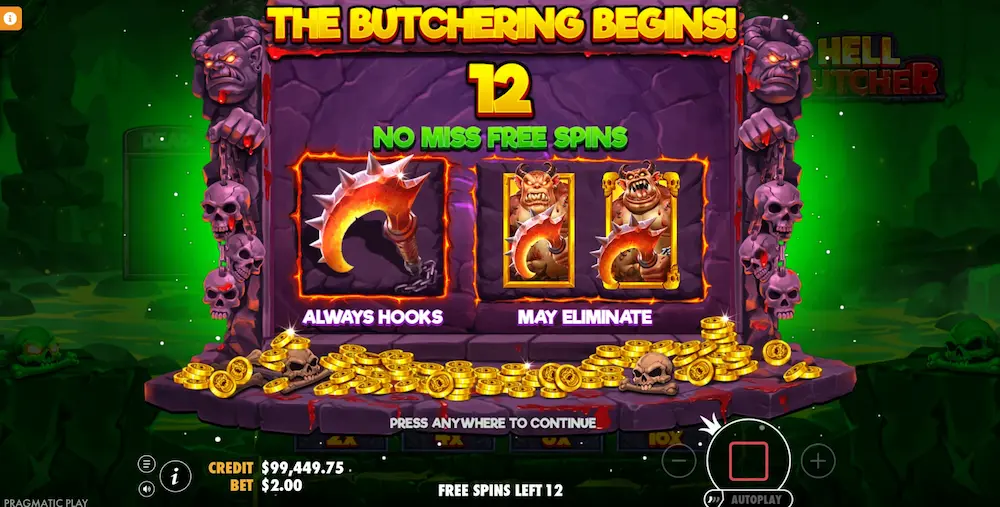
The four-tier free spins structure is where the Hell Butcher slot’s multiplier system reaches its highest potential, since longer cascade chains tend to occur more frequently within this feature than in the base game. A few tactical points are worth keeping in mind specifically for this mechanic:
- Confirm the bet size before the free spins feature triggers, since it cannot be changed once a mode has started.
- Understand that higher free spins modes require more Scatter symbols to trigger naturally, meaning they occur less frequently but generally carry stronger starting conditions.
- If a bonus buy option is available, treat it as a separate, clearly budgeted expense rather than drawing from the same funds allocated to base game spins.
- Avoid judging a single free spins round’s outcome as representative — variance within this feature remains high even across a large sample of triggers.
Building a Hell Butcher Strategy Around Session Frequency, Not Just Session Size
Most bankroll discussions focus on how much to risk per session, but how often sessions happen matters just as much for long-term outcomes. Playing several shorter sessions spread across a week generally produces a more stable overall experience than concentrating the same total bankroll into one extended sitting, since each session resets with its own fresh stop-loss and take-profit boundaries.
This distinction is easy to overlook when planning focuses only on per-session numbers. A Hell Butcher strategy that accounts for session frequency — not playing every single day, spacing sessions out enough to review the log in between — tends to hold up better over months than one that only thinks in terms of a single sitting at a time.
Volatility-Adjusted Bankroll Planning
Because the Hell Butcher slot sits in the high volatility category despite its 99% RTP, bankroll planning benefits from being adjusted relative to lower-volatility alternatives a player might be more used to. The table below compares recommended bankroll depth across volatility tiers, measured in number of minimum-bet spins a session should be able to sustain.
| Volatility Tier | Recommended Spin Depth | Bankroll Implication |
|---|---|---|
| Low volatility | 50–75 spins | Smaller reserve needed |
| Medium volatility | 75–100 spins | Moderate reserve needed |
| High volatility (Hell Butcher) | 100–150 spins | Larger reserve recommended |
This deeper spin depth requirement is one of the more overlooked aspects of a Hell Butcher strategy — players coming from lower-volatility titles often underestimate how much bankroll depth this game’s variance actually calls for, even with a favorable RTP working in their favor over the long run.
Bonus Buy vs Natural Trigger: A Comparison
The bonus buy option lets a player pay a fixed multiple of their stake to enter one of the free spins modes directly, bypassing the need to land Scatter symbols naturally. Deciding whether this fits into a given Hell Butcher strategy depends on session goals and bankroll depth.
| Approach | Cost Structure | Best Suited For |
|---|---|---|
| Natural trigger | Spread across base game spins | Longer sessions, gradual bankroll use |
| Bonus buy | Fixed upfront cost per entry | Shorter sessions, dedicated feature budget |
Bonus buy access doesn’t alter the underlying odds within the free spins round itself, but it does concentrate risk into fewer, larger decisions rather than distributing it across many smaller base game spins — a distinction worth weighing carefully before including it as a regular part of a session plan.
Autoplay Precautions
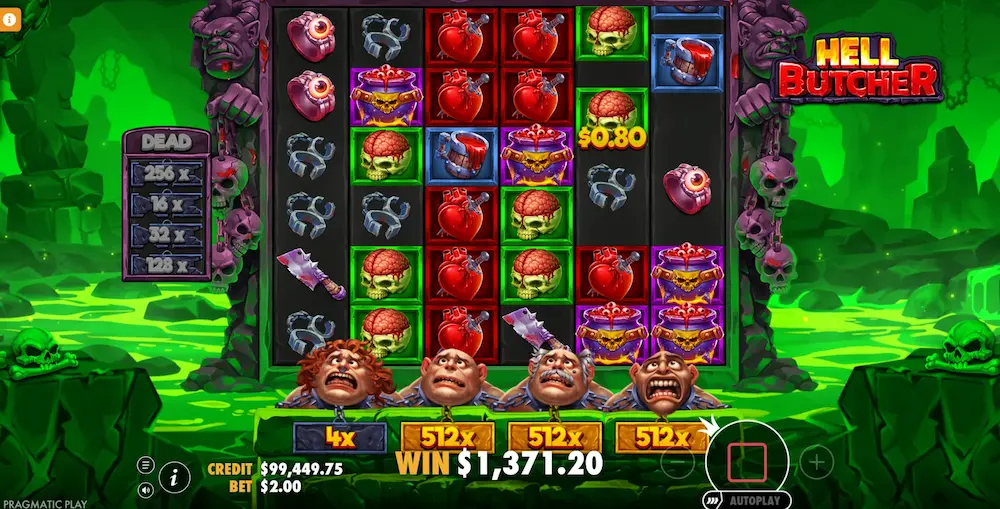
Autoplay can be a convenient feature, but it removes the manual pacing that naturally slows down decision-making between spins. Within a disciplined Hell Butcher strategy, autoplay should be used cautiously:
- Set a stop-on-loss-limit and stop-on-win-limit before activating autoplay, since most platforms support these parameters directly.
- Avoid using autoplay during the first sessions with this game, since it’s easier to misjudge pacing before understanding the cascade and multiplier rhythm firsthand.
- Periodically check in on an autoplay session rather than letting it run fully unattended, particularly during longer cascade sequences.
- Treat autoplay as a pacing tool, not a way to disengage from the session’s predefined stop-loss and take-profit rules.
Why Comparing Sessions to Each Other Is More Useful Than Comparing Them to a Single Big Win
It’s tempting to measure every new session against the best one on record — the time a long cascade chain pushed the multiplier close to its ceiling. But that comparison sets an unrealistic bar, since standout sessions are, by definition, statistical outliers rather than a representative baseline.
A more useful comparison looks at how a given session stacks up against the typical range shown in a session log — was bet sizing consistent with past sessions, did the session length match the plan, did the result fall within the range of outcomes already seen many times before. This kind of relative, log-based comparison keeps expectations grounded in a way that comparing against a single exceptional session never can.
Keeping a Session Log
Tracking outcomes over time turns a Hell Butcher strategy from a set of one-off decisions into a system that can actually be refined. A simple log doesn’t need to be complicated — the table below outlines the core fields worth recording after each session.
| Field | Purpose |
|---|---|
| Session date | Tracks frequency and spacing of play |
| Starting budget | Baseline for calculating session result |
| Bet size used | Correlates outcomes with bet level over time |
| Longest cascade chain observed | Helps gauge how the multiplier system is behaving over time |
| Result (win/loss amount) | Core data point for long-term evaluation |
Over several sessions, this kind of record reveals patterns that are difficult to notice in the moment — which bet sizes and session lengths tend to produce more stable outcomes, and whether stop-loss or take-profit limits are actually being respected in practice.
The Role of Boredom in Undermining a Hell Butcher Strategy
Discussions of session discipline often focus on chasing losses or riding a hot streak too long, but a quieter threat is simple boredom during an extended dry stretch. When nothing significant has happened for a while, the temptation isn’t always to increase bets — sometimes it’s to speed up play, switch to autoplay without proper limits, or start splitting attention with something else entirely, all of which can quietly erode the session plan.
Recognizing boredom as a distinct risk factor — separate from tilt or overconfidence — is a useful addition to any Hell Butcher strategy. A short, planned break during a slow stretch addresses this directly, restoring the attentiveness that a purely mechanical stop-loss rule doesn’t fully cover on its own.
What a Session Log Can Reveal That Memory Alone Cannot
Human memory is naturally biased toward emotionally significant events, which means a handful of standout wins or losses tend to dominate how a player recalls their overall experience with a game, even if those sessions were statistically unrepresentative. A written log corrects for this by treating every session with equal weight, regardless of how memorable it was in the moment.
Over enough entries, patterns emerge that memory alone would never surface — a particular bet size correlating with shorter average sessions, or a tendency for stop-loss limits to be respected more consistently at certain times of day. These are the kind of granular, unglamorous insights that make a session log worth the minor effort of maintaining it.

Adjusting a Hell Butcher Strategy as Bankroll Changes Over Time
A strategy built around a specific bankroll figure doesn’t automatically stay well-calibrated as that bankroll grows or shrinks. If a player’s total gambling budget increases significantly, simply continuing to bet at the old fixed amount understates the 5% session guideline, while a shrinking bankroll without a corresponding downward adjustment in bet size does the opposite, pushing session risk higher than originally intended.
Revisiting the bankroll allocation table periodically — not after every session, but at natural intervals such as monthly — keeps a Hell Butcher strategy proportional to current circumstances rather than anchored to whatever the starting bankroll happened to be months earlier.
Why “Feeling Due” Is a Trap Worth Naming Explicitly
The sense that a long cascade chain is “due” after an extended dry stretch is one of the most common and most persuasive cognitive traps in slot play generally, and it applies just as strongly here given how much this game’s payout potential is concentrated in extended chains. The feeling arises naturally from pattern-seeking instincts that serve people well in most areas of life but actively mislead when applied to independent random events.
Naming this trap explicitly — rather than treating it as a vague background feeling — makes it easier to catch in the moment. A Hell Butcher strategy that includes a simple mental checkpoint, something like consciously asking “would I make this same bet-size decision if I hadn’t just experienced a dry stretch,” helps separate a reasoned decision from one driven by the illusion that the game somehow owes a result.
Hell Butcher Slot: Complete Game Guide
RTP, grid mechanics, the dynamic multiplier, and free spins modes explained in full detail.
Read the Full Guide →Six Common Mistakes That Undermine a Hell Butcher Strategy
Even a well-planned approach can break down in execution. The following mistakes come up repeatedly among players applying strategy to high-volatility cluster pays slots with compounding multiplier systems:
- Increasing bet size after a losing stretch in an attempt to recover losses faster, rather than sticking to the pre-planned bet level.
- Assuming a high RTP reduces the length of dry stretches, when in fact RTP and volatility describe different aspects of the game entirely.
- Treating a single free spins round’s outcome as a meaningful sample rather than one data point among many.
- Skipping the demo mode entirely and learning the cascade and multiplier rhythm using real-money spins instead.
- Using autoplay without setting stop-on-loss or stop-on-win parameters beforehand.
- Continuing to play immediately after hitting the take-profit threshold, effectively erasing the discipline the limit was meant to enforce.
Most of these mistakes share a common thread — they involve abandoning a pre-set rule in response to in-the-moment emotion, which is precisely the scenario stop-loss, take-profit, and session limits are designed to prevent.
Hell Butcher Strategy: Frequently Asked Questions
No. Chain length isn’t predictable from its first few steps, so reacting to an early cascade by raising the bet is a common mistake. Bet size should be decided before the spin starts and only adjusted gradually over time as part of a planned progression, not spin to spin based on how a chain is developing.
This depends on personal risk tolerance rather than any mathematical advantage, since all four modes remain governed by the same random cascade mechanic once entered. A more balanced approach is to treat bonus buys as a separate, clearly budgeted expense rather than saving toward one specific mode at the expense of regular bankroll discipline.
It generally shouldn’t be adjusted based on recent results at all. A string of strong sessions doesn’t change the underlying odds of the next one, so loosening a stop-loss because things have been going well reintroduces the exact kind of emotional decision-making the rule was designed to prevent.
Yes, over enough sessions it gives a realistic sense of how often long chains actually occur, which helps counter the tendency to overestimate their frequency based on a few memorable standout spins. It’s most useful as a long-term calibration tool rather than something to check mid-session.
It can be, but only once the game’s cascade and multiplier rhythm has already been learned through manual play, and only with stop-on-loss and stop-on-win limits set before activating it. Used without those safeguards, autoplay removes the natural pacing that helps catch a session drifting past its planned limits.
Abandoning a pre-set rule in response to an in-the-moment emotion — usually chasing losses after a cold stretch or continuing to play right after hitting a take-profit target. Both situations involve overriding a decision made calmly beforehand with a reaction made under pressure in the moment.
Psychological Discipline During High-Volatility Sessions
Long stretches without a meaningful win are a normal, expected part of playing a high-volatility title, not a sign that something is wrong with the game or that the compounding multiplier is somehow “overdue” to trigger a long chain. Recognizing early signs of tilt — impulsively raising bets, chasing losses, or repeatedly telling yourself “just one more spin” — is one of the more valuable skills a Hell Butcher strategy can build over time. The moment any of these patterns appear, the most effective response is usually a short break rather than continued play.
Framing the game as entertainment rather than a source of guaranteed income also plays a meaningful role in maintaining discipline. This mindset doesn’t change the math behind the RNG or the game’s favorable 99% RTP, but it does change how a player responds emotionally to both winning and losing stretches, which in practice has a much larger effect on session outcomes than any specific betting tactic.




Hell Butcher Strategy: Summary
A sound Hell Butcher strategy rests on a handful of interconnected habits: allocating bankroll in proportion to the game’s high volatility, choosing a bet size deliberately rather than reactively, setting stop-loss and take-profit limits before a session begins, and tracking results over time to refine future decisions. None of these habits guarantee a winning outcome, since the underlying result of every spin remains governed by an independently certified random number generator. What they do provide is a structured, repeatable framework that keeps sessions controlled and intentional, even during the extended dry stretches that come with playing a high-volatility cluster pays title.
Players who haven’t yet reviewed how the underlying mechanics work — including the grid structure, symbol system, and compounding multiplier this strategy is built around — can find a full technical breakdown in the main Hell Butcher slot guide.